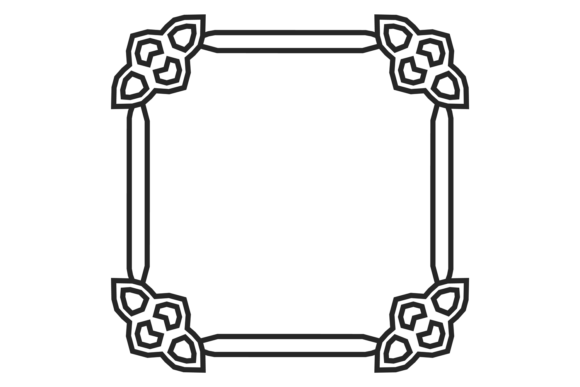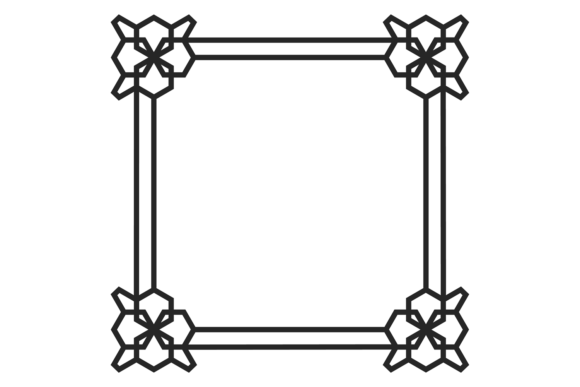
Decorative Retro Frame. Square Geometric
A Clean, Confident Border That Knows Its Role
First impression? This isn’t a shout-it-from-the-rooftop motif—it’s a quiet, confident frame. The Decorative Retro Frame. Square Geometric lands with subtle authority: crisp right angles, balanced negative space, and a rhythmic line weight that feels both mid-century and refreshingly modern. It doesn’t compete with your main subject; it cradles it. I immediately pictured it anchoring a monogram on a linen tea towel, wrapping a tiny embroidered owl on a baby onesie, or framing a custom quote on a cotton tote for a local boutique. Its square geometry gives structure—especially welcome when working with organic, hand-drawn elements or soft typography.
Where It Shines in Real Embroidery Projects
I tested the Decorative Retro Frame. Square Geometric as part of a small-batch run of embroidered kitchen towels for a craft fair. Paired with a simple sans-serif “Bake Joyfully” script inside the frame, it elevated the whole piece—no extra embellishment needed. The clean lines translated beautifully into satin stitch borders with minimal puckering, and the open interior gave plenty of breathing room for dense fill-stitch text without visual overload.
It works especially well for:
- Custom apparel: On medium-weight sweatshirts and structured tote bags, the frame adds polish without bulk—ideal for Etsy sellers offering personalized gifts;
- Baby embroidery: Its symmetry and lack of fussy detail make it gentle and timeless on onesies, burp cloths, and nursery pillows;
- Embroidered patches: The sharp corners and consistent line thickness hold up cleanly in cut-and-sew applications;
- Holiday and wedding gifts: Framing names, dates, or short phrases (e.g., “Est. 2024” on a couple’s apron) gives instant heirloom energy;
- Digital product previews: As an Illustrations asset, its transparent PNG and SVG versions drop seamlessly into printable mockups—great for small shop owners building cohesive branding across social and product listings.
Where to Pause—and Plan Ahead
This design is elegant, but elegance demands intention. It’s not a “drop-in-and-stitch” solution for every surface. On curved areas like caps or tightly fitted baby hats, the rigid square corners can distort unless you adjust placement or reduce scale. On stretchy fabrics (think lightweight knits or ribbed tees), stabilizer choice becomes non-negotiable—use cutaway + tear-away combo to prevent wobble in those straight-line segments.
Thin fabrics—like voile or gauzy cotton—need careful thread color contrast testing. A light grey frame on ivory linen reads softly; the same on pale pink baby knit can disappear unless you deepen the thread tone or add a subtle underlay. And while the line border looks clean in digital form, remember: fine lines translate to narrow satin stitches. Below ~5mm width, stitch density matters more—you’ll want to verify the embroidery file’s actual stitch path before hooping.
Design Integrity Meets Customer Trust
Your customers don’t see vector points—they feel intention. When someone receives a handmade product with the Decorative Retro Frame. Square Geometric thoughtfully placed around their child’s name on a pillow cover, they sense care. That frame says: *This wasn’t rushed. This was chosen.* It reinforces professionalism—not because it’s flashy, but because it’s resolved. For Etsy sellers and craft business owners, that quiet confidence builds buyer engagement and repeat orders. It also plays well across collections: use it consistently on tea towels, aprons, and holiday stockings, and your brand starts to feel cohesive—even without a logo.
Practical Notes Every Embroidery Designer Should Run Through
Before stitching your first client piece—or listing your next digital embroidery file—do these six things:
- Test on scrap fabric that matches your final project’s weight and texture—especially if using textured weaves or dark backgrounds;
- Check thread color contrast in natural light *and* under store lighting (many craft fairs are fluorescent);
- Review stitch density in your embroidery software—look for tight corners where satin stitches might crowd or overlap;
- Confirm hoop size compatibility: this is a square design, so avoid hoops that force awkward rotation or trimming;
- Inspect small details at 200% zoom—make sure no stray anchor points or misaligned joins hide in the vector paths (especially important since it’s offered as EPS, SVG, and transparent PNG);
- Verify licensing before selling finished products or bundling it into commercial design assets. As a Graphics file, usage rights aren’t implied—always check the source.
Final Thought: Less Is Anchored, Not Empty
The Decorative Retro Frame. Square Geometric doesn’t try to be everything. It’s a deliberate pause—a visual inhale before the main event. That makes it unusually versatile: equally at home on a minimalist baby blanket and a bold boutique sweatshirt. It won’t carry your entire brand, but it will support your best work with quiet strength. If your goal is clarity, consistency, and calm confidence in your embroidery project, this frame earns its place—not as decoration, but as architecture.